We track 13 properties on the Hudson bluff and in the interior. Two of them are museums.
Museums first, venues second
Lyndhurst occupies 67 acres in Tarrytown, was built in 1838 to Alexander Jackson Davis's design, and was bought by Jay Gould in 1880 (Lyndhurst). Kykuit was completed in 1913 for John D. Rockefeller and is owned by the National Trust for Historic Preservation (savingplaces.org).
Both are preservation institutions that run event programs on their own terms, and their terms are set by conservation rather than hospitality. A house museum's obligations are to the collection, the interiors and the tour calendar. Your wedding is a permitted use, at the discretion of people whose actual job is keeping an 1838 building standing.
Which is why we do not describe any museum property on this site as bookable until we can point at the page and the date that says so. Directories that list these properties as wedding venues without citing an event policy are guessing with somebody's calendar, and the somebody is you.
What a historic house restricts
Ask about all of these in the first ten minutes, because every one of them has ended a plan late.
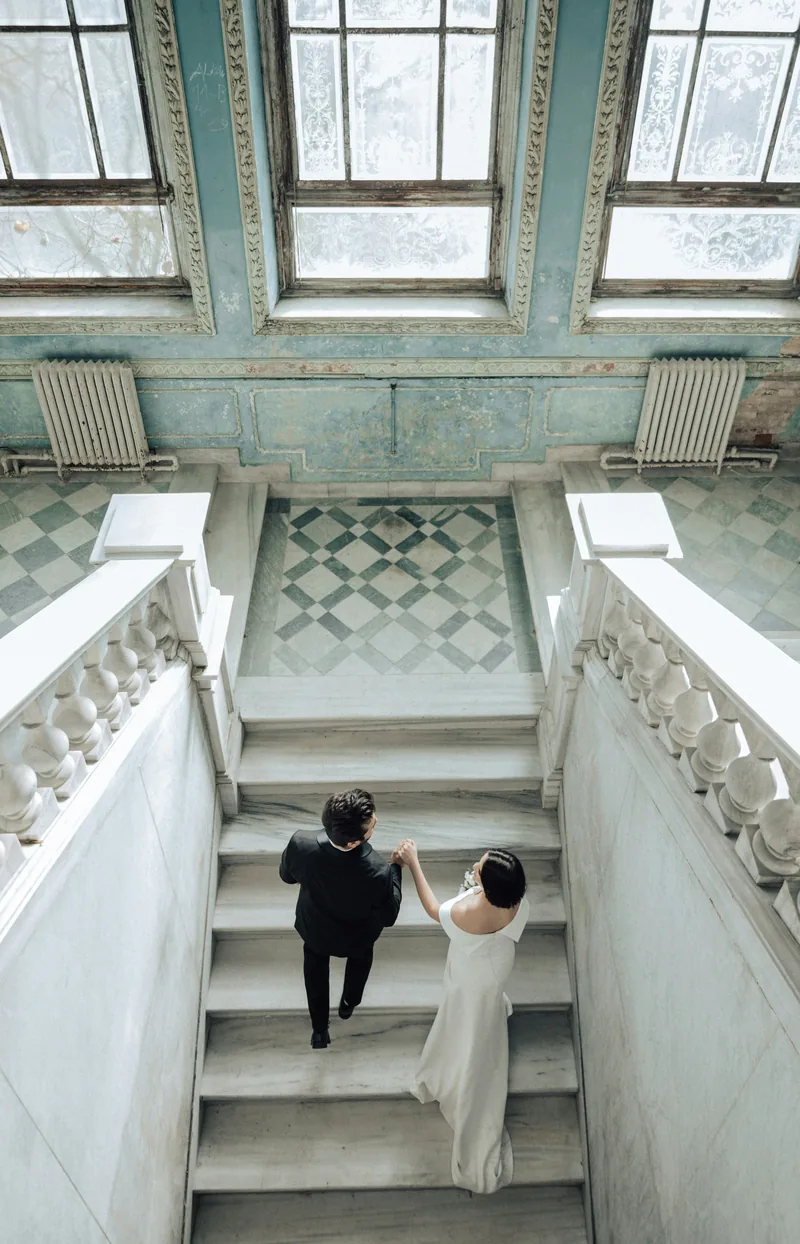
Load-in. A period house frequently has one usable door, no service corridor, and a gravel approach that will not take a box truck. Ask where the caterer's truck parks, how far the run to the kitchen is, and whether anything has to go up a staircase that is itself an artifact.
Kitchen, or the absence of one. Many of these houses have no commercial kitchen at all. Your caterer will be cooking in a tent behind the house, which is another tent, with its own power draw.
Open flame and candles. Usually prohibited indoors. Sometimes prohibited outdoors within a set distance of the building. This decides your entire lighting design, so settle it before you hire anybody to design lighting.
Amplified sound and curfew. Historic properties sit inside residential villages with noise ordinances that outrank your contract. Get the curfew in the document, and get the overtime rate for breaking it in the same document.
Occupancy of the period rooms. The drawing room in the photographs seats a fraction of what you think. Ask for the seated number with tables in it, and ask whether guests may enter it at all or only look in from the threshold.
Rain. Almost always the tent. See below.
The tent is not a contingency, it is the venue
Most large estate weddings in this county happen under canvas rather than in the drawing room, because the drawing room seats sixty and the guest list is 171. Once you know that, the tent stops being a rain plan and becomes the reception space, which changes what you should be shopping for: not a house with a nice room, but a house with a level lawn, a power supply, a vehicle route to that lawn, and a village that will issue a permit for it.
Price it as its own document, at the size that fits your list in the rain, before you compare an estate per-head against a hall per-head. The full anatomy of a tent quote is here.
What you are actually paying the premium for
The bluff. The Hudson runs 3.6 miles wide at its broadest point in the county (Westchester County Planning), and the estates were sited in the nineteenth century by people buying exactly that view with considerably more money than you have. You are renting the results of somebody else's real estate decision, and the reason it costs what it costs is that nobody is making more of it.
That premium is defensible. What is not defensible is paying it and then holding the reception in a tent with the sidewalls down, facing away from the water, because the ceremony ran late and the light went. Walk the site at the hour of your ceremony, in the month of your wedding if you can, and look at where the sun actually is. Every estate on this page has one direction worth photographing and three that are not.
How we list estates
Access status, last-verified date, and a written assessment on every listing, exactly as everywhere else on this site. For museum-owned properties we publish the event policy we can cite and nothing beyond it. Where a property has no citable policy, the listing says so and stays that way until it does. See how this directory works.